Home medical devices have quietly taken over a lot of routine healthcare. Blood pressure monitors, glucose meters, digital thermometers, TENS units, pulse oximeters — most now live in a bathroom cabinet or bedside drawer rather than a clinic. All of them run on ordinary household batteries, and the battery you put in matters more here than it does in a TV remote.
Before anything else: this is a guide to household battery formats and chemistry, not medical advice. Always follow the power specification printed in your device’s manual, and never substitute a battery type for a device the manufacturer hasn’t approved it for. For any device tied to a serious health condition — an insulin pump, an implanted or wearable cardiac monitor, ventilation equipment — follow your device manufacturer’s and healthcare provider’s instructions exactly rather than general guidance like this one.
Why Medical Devices Are Less Forgiving of Battery Choice
A dying battery in a wireless mouse causes a moment’s inconvenience. A dying battery in a blood pressure monitor or glucose meter can cause something worse: a reading that looks normal but isn’t. Many measurement devices don’t fail cleanly — they keep producing numbers as voltage drops, and those numbers drift before the low-battery icon appears.
Two things make medical devices different from everyday electronics:
- Measurement accuracy depends on stable voltage. Alkaline and lithium batteries hold their voltage differently as they discharge — this matters more in a device calculating a reading than in a device just running a motor or a light.
- Many of these devices sit unused between measurements, sometimes for months. A battery with strong shelf life avoids the scenario where a first-aid-kit thermometer or emergency glucose meter is unreadable the one time it’s needed.
Battery Guide by Device
Digital Thermometers
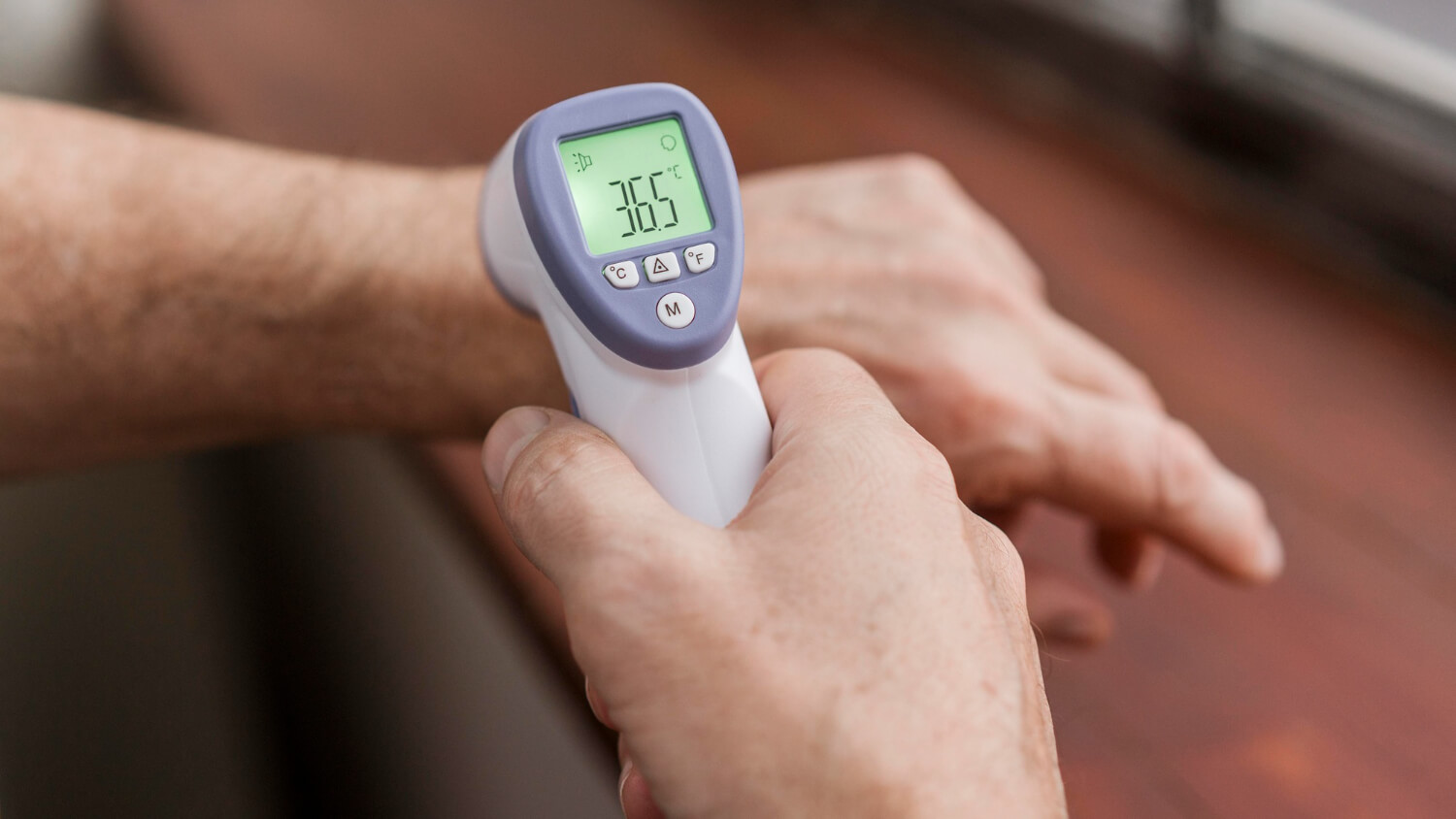
Most digital thermometers take either a single AAA battery or a small lithium coin cell (CR2032 or CR2025), depending on the model. Coin-cell thermometers are common in slim/flexible-tip designs; AAA is more common in larger clinical-style thermometers.
Lithium is worth the small premium here. It holds a flatter voltage curve than alkaline, which keeps the last few readings before a battery change as accurate as the first, and it has a longer shelf life for a device that may only get used a handful of times a year.
Browse Uniross Lithium Coin Cells →
Blood Pressure Monitors
Home blood pressure monitors typically run on 4× AA batteries, occasionally AAA in compact wrist models. These devices draw a short but meaningful pulse of current while inflating the cuff, and a weakening battery set can cause an inflation error or an inconsistent reading before it triggers a low-battery warning.
Alkaline is fine for a monitor used daily, since it gets cycled through regularly enough that a fading battery is noticed quickly. For a monitor used infrequently — kept for occasional checks rather than daily monitoring — lithium AA is the safer choice, both for shelf life and for maintaining consistent cuff pressure on the reading that matters.
Browse Uniross AA Lithium → | Browse Uniross Alkaline AA →
Blood Glucose Meters
The large majority of glucose meters use a CR2032 lithium coin cell, with some models using a CR2025. These are low-drain devices, so the battery genuinely lasts a long time — often a year or more — but that long interval is exactly why a fresh, quality cell matters. A meter that hasn’t had its battery checked in eighteen months is the last thing anyone wants to discover mid-reading.
If you manage diabetes with regular testing, keep one spare CR2032 in the same place as your test strips, not in a drawer elsewhere. It removes the single most common reason for a missed reading.
Pulse Oximeters
Fingertip pulse oximeters almost universally run on 2× AAA batteries. Battery life is typically weeks to a couple of months depending on use, since the device only draws power while a reading is being taken. Alkaline AAA is standard here; lithium AAA is worth it for anyone using an oximeter for regular monitoring rather than occasional spot checks, since it performs more consistently as it depletes.
TENS and EMS Units
TENS (transcutaneous electrical nerve stimulation) and EMS (muscle stimulation) units typically use AAA batteries, and some older or higher-output models use a 9V cell. These units draw current in pulses to deliver stimulation, and a weak battery is one of the more common causes of a unit feeling “weaker” than usual — the stimulation intensity is directly tied to battery voltage.
Because output strength is voltage-dependent, this is a case where fresh batteries genuinely change how the device feels to use. Alkaline is standard; if you use a TENS unit daily for pain management, keep a rotation of spares rather than running one set to empty.
Browse Uniross AAA → | Complete Guide to 9V Batteries
Medical Alert Pendants and Wearable Call Buttons
Personal medical alert pendants — the wearable call buttons used for fall detection or emergency assistance — typically run on lithium coin cells (CR2032 or similar) for their small size and multi-year shelf life. This is one of the clearest cases in this list for choosing lithium: the pendant is designed to sit unused for long stretches and then work instantly the one time it’s needed. A device rated for a multi-year battery life needs a cell that actually holds its charge for that long, not a budget cell that discharges faster than its rating suggests.
Check the device manual for the manufacturer’s specified replacement interval, and replace on that schedule rather than waiting for a low-battery signal — the whole point of these devices is that they need to work on the day you don’t expect to need them.
Browse Uniross Lithium Coin Cells →
Portable Nebulizers
Battery-powered portable nebulizers (as opposed to mains-powered clinic models) commonly use AA batteries, sometimes in sets of 4 for the higher current draw of the compressor motor. This is a higher-drain application than most devices on this list, so alkaline batteries will deplete noticeably faster here — lithium AA holds up much better under the sustained load of running a small compressor motor.
Chemistry: Alkaline vs Lithium for Medical Devices
| Factor | Alkaline | Lithium (primary) |
|---|---|---|
| Voltage stability under load | Declines steadily | Stays flatter for longer |
| Shelf life | ~5–7 years | ~10 years |
| Best suited to | Daily-use devices, checked often | Infrequently used or emergency devices |
| Cold-weather performance | Weaker | Stronger |
The general rule for medical devices: the less often you use it, the more lithium makes sense. A daily blood pressure monitor gets exercised often enough that a weakening alkaline battery is noticed quickly. A first-aid-kit thermometer, an emergency glucose meter, or a medical alert pendant may go a year or more between real use — that’s exactly the scenario lithium’s shelf life and flat discharge curve are built for.
Practical Rules for Medical Device Batteries
Don’t wait for the low-battery icon. Many medical devices show a valid-looking reading right up until the battery fails outright. If a device is used for anything you rely on for a health decision, replace batteries on a schedule rather than waiting for a warning.
Don’t mix old and new batteries, or different brands, in a multi-battery device. Uneven cells discharge at different rates and can cause a device to behave unpredictably well before either cell is empty — the same rule that applies to torches and radios applies here, with higher stakes.
Check whether the device is rechargeable-compatible before using NiMH. Standard NiMH rechargeables deliver 1.2V per cell against 1.5V for alkaline or lithium. Some devices tolerate this fine; others show incorrect readings or refuse to power on. Unless the manufacturer explicitly lists rechargeable batteries as compatible, use single-use alkaline or lithium.
Keep a spare on hand for anything used unpredictably. Glucose meters, alert pendants, and first-aid-kit devices are used on their own schedule, not yours. A spare battery stored with the device removes the single most common reason these devices fail at the moment they’re needed.
For anything safety-critical, follow the manufacturer’s spec exactly. This guide covers general household battery-powered health devices. For equipment tied to a serious or life-threatening condition, always use the exact battery type specified by the manufacturer and consult your healthcare provider or device supplier with any questions — don’t substitute based on general guidance.
Uniross Batteries for Home Health Devices
- Uniross Lithium Coin Cells (CR2032 / CR2025) — glucose meters, slim thermometers, medical alert pendants
- Uniross AA Lithium — nebulizers, infrequently used blood pressure monitors
- Uniross Alkaline Essentials (AA/AAA) — daily-use monitors, oximeters, TENS units
Frequently Asked Questions
Can I use rechargeable batteries in medical devices?
Only if the manufacturer explicitly says the device supports them. Rechargeable NiMH batteries deliver 1.2V per cell rather than the 1.5V of alkaline or lithium, which can cause incorrect readings or prevent the device from powering on. When in doubt, use single-use batteries.
Why does my blood pressure monitor give inconsistent readings?
A weakening battery is one of the most common causes. Because these devices draw a burst of current to inflate the cuff, a battery that’s otherwise “fine” for low-drain devices can cause inflation errors or inconsistent readings. Replace with a fresh set and retest before assuming a device fault.
How long do glucose meter batteries last?
Most CR2032-powered meters last a year or more under normal testing frequency, since the device only draws power briefly during a reading. Because the interval between changes is long, use a good-quality lithium cell and keep a spare with your test strips.
Is lithium or alkaline better for medical devices?
It depends on how often the device is used. Lithium’s flatter voltage curve and longer shelf life make it the better choice for devices used infrequently or kept for emergencies. Alkaline is perfectly adequate for devices used daily, where a weakening battery gets noticed and replaced quickly.
Are Uniross batteries approved for medical devices?
Uniross batteries are general-purpose household batteries and are not marketed or certified as medical devices themselves. Always confirm your device’s power specification in its manual and use the battery format and chemistry the manufacturer specifies.
Key Takeaways
Battery choice matters more for medical devices than for most household electronics, because a weakening battery can affect a reading before it triggers a warning. Match the chemistry to how often the device is used — alkaline for daily devices, lithium for anything kept for occasional or emergency use — replace on a schedule rather than waiting for a low-battery signal, and always follow the manufacturer’s specification for anything safety-critical.