Your device is buried inside a gas meter on a street corner. It transmits readings every hour, handles -55°C winters and +85°C summers, and cannot be touched for a decade. You get one battery choice. Get it wrong and the entire installation requires a costly service visit.
That is the exact problem lithium thionyl chloride batteries were designed to solve. And once engineers understand why, most never specify anything else for long-life, low-drain industrial applications.
What Is a Lithium Thionyl Chloride Battery?
A lithium thionyl chloride (Li-SOCl₂) battery is a primary (non-rechargeable) electrochemical cell in which lithium metal serves as the anode and thionyl chloride (SOCl₂) acts as both the cathode material and the liquid electrolyte solvent.
The result is the highest energy density of any commercially available primary cell chemistry — up to 730 Wh/kg and 1,420 Wh/L — delivered at a stable 3.6 V nominal voltage. Combined with a self-discharge rate of less than 1% per year, Li-SOCl₂ cells can sustain operational devices for 10 to 20 years on a single charge.
These batteries are not rechargeable and are not intended for high-rate continuous discharge. They are engineered for one specific mission: reliable, maintenance-free power over very long service lives in environments where battery replacement is impractical or impossible.
Key Advantages of Lithium Thionyl Chloride Batteries
1. Highest energy density among primary cells
At up to 730 Wh/kg, Li-SOCl₂ cells store significantly more energy per unit weight than alkaline (150 Wh/kg), lithium manganese dioxide (280 Wh/kg), or lithium iron disulfide (300 Wh/kg). In size-constrained installations — inside a meter housing, inside a sensor node — this translates directly into longer service life from a smaller footprint.
What this means for your business:
Smaller cells deliver the same service life, which reduces housing size, shipping weight, and bill-of-materials cost per unit. For OEMs producing at volume, the savings compound quickly.
2. Flat 3.6 V discharge curve
The nominal voltage of 3.6 V remains almost constant throughout the battery’s entire discharge cycle, dropping only near the very end of life. Many competing chemistries (including alkaline and lithium iron) show a gradual voltage taper. A flat curve means consistent performance for voltage-sensitive electronics from first use to last.
What this means for your business:
Devices behave predictably across their entire deployed life. Fewer field complaints, fewer firmware edge cases to handle for low-voltage conditions, and a more reliable end-user experience — all of which reduce aftersales support costs.
3. Ultra-low self-discharge
At less than 1% capacity loss per year, a Li-SOCl₂ cell loses only a small fraction of its charge during storage. A battery manufactured today retains usable capacity well into the next decade. This is what makes 10-year rated shelf life a realistic specification, not a marketing claim.
What this means for your business:
You can hold inventory without worrying about battery degradation. Pre-assembled devices can sit in a warehouse for months before shipping without affecting end-user battery life. This simplifies supply chain planning and reduces warranty exposure significantly.
4. Extreme temperature range
Li-SOCl₂ cells perform across a wider operating temperature range than any other common primary chemistry: **−60 °C to +85 °C** for standard bobbin cells. This makes them the default choice for outdoor infrastructure, polar monitoring equipment, down-hole oil and gas sensors, and aerospace applications.
What this means for your business:
A single battery SKU covers deployments across climates and geographies — from Scandinavian winters to Middle Eastern summers. You qualify one cell, validate one design, and ship globally without chemistry substitutions or regional variants.
5. Hermetically sealed, leak-resistant construction
The stainless steel case and glass-to-metal hermetic seal mean Li-SOCl₂ cells do not leak under normal operating conditions — a critical requirement for embedded electronics where a leaking battery would destroy the host device.
What this means for your business:
Battery leakage is one of the most common causes of field failures and warranty claims in battery-powered hardware. Hermetic sealing eliminates that failure mode, protecting both the device and your brand reputation in the field.
6. Elimination of maintenance and service costs
A 10–15 year service life is not just a technical specification — it is a commercial argument. Every battery replacement requires a field visit: labour, scheduling, travel, and device downtime. At scale, across thousands of deployed units, that cost dwarfs the cost of the battery itself.
What this means for your business:
Specifying Li-SOCl₂ converts a recurring operational expense into a one-time capital cost. For businesses deploying smart meters, industrial sensors, or remote infrastructure at scale, this is the most significant total-cost-of-ownership advantage the chemistry offers.
Battery Construction: Bobbin-Type vs. Spiral-Wound
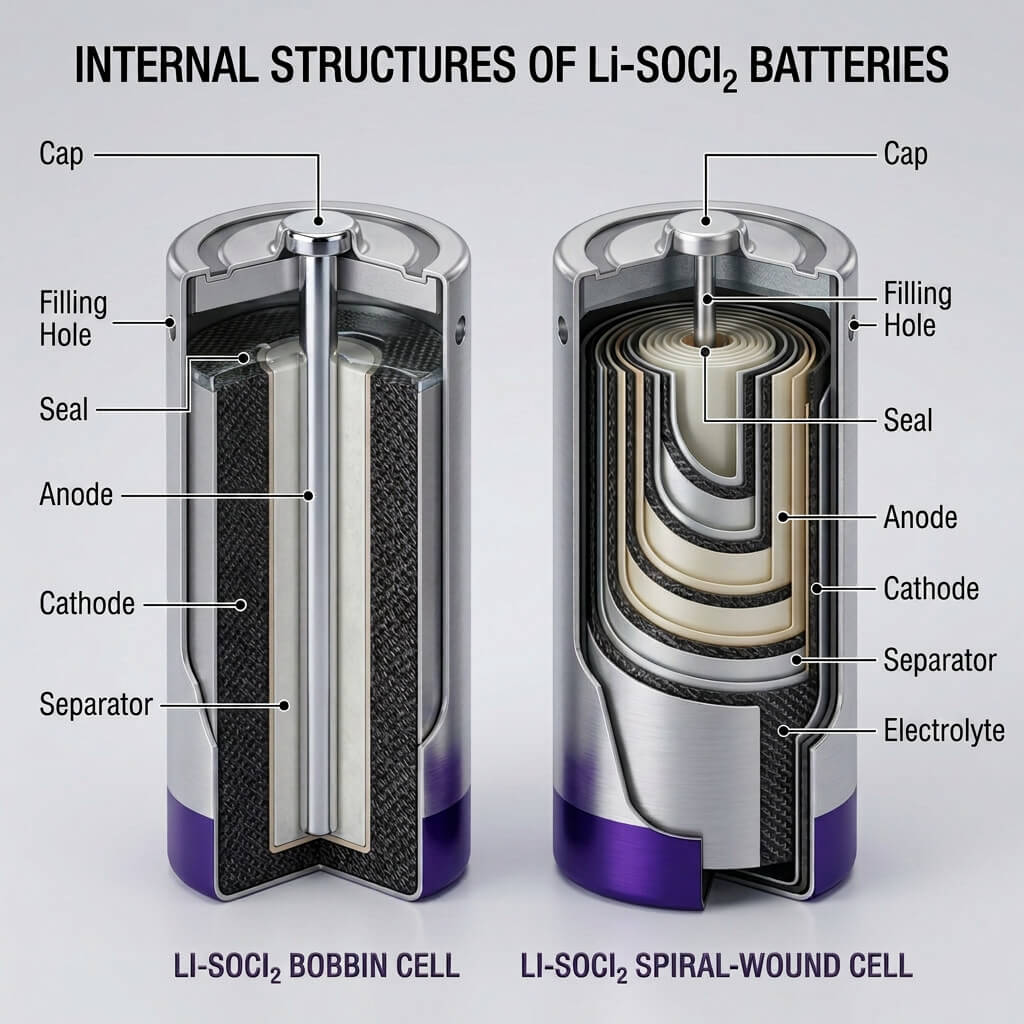
Li-SOCl₂ cells are manufactured in two primary configurations. Choosing the right one depends entirely on your discharge profile.
| Bobbin-Type | Spiral-Wound | |
|---|---|---|
| Construction | Cylindrical carbon cathode, lithium anode lining | Tightly wound anode/cathode strips |
| Internal impedance | Higher | Lower |
| Continuous current | Low (typically ≤100 mA) | High (up to 2 A) |
| Pulse current | Moderate | Excellent |
| Energy density | Higher | Slightly lower |
| Best for | Long-life, low-drain devices | High-pulse, burst-communication devices |
| Typical applications | Smart meters, asset trackers, wireless sensors | Alarms, emergency beacons, GPS trackers |
Bobbin-type cells dominate industrial IoT and metering applications. Their high energy density and low self-discharge are unmatched for devices that take infrequent readings and transmit small data packets.
Spiral-wound cells suit applications that demand occasional high-current pulses — for example, a cellular IoT module that wakes up, connects to a network, transmits, and goes back to sleep. The tighter electrode winding reduces internal resistance, enabling the burst current delivery required.
For applications combining both profiles (very low average drain with occasional high pulses), hybrid pulse capacitor (HPC) designs pair a bobbin Li-SOCl₂ cell with a large capacitor. The capacitor absorbs pulse loads while the battery recharges it during idle periods.
Where Li-SOCl₂ Batteries Are Used?
The chemistry appears wherever these three conditions align: long service life is required, drain is low, and the operating environment is demanding.
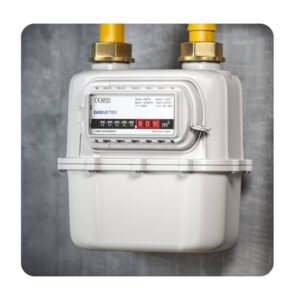
Smart utility metering (AMI/AMR)
The single largest application globally. Water, gas, and electricity meters using wireless communication (LoRaWAN, NB-IoT, Sigfox) run for 10–15 years on a single Li-SOCl₂ AA or C cell.
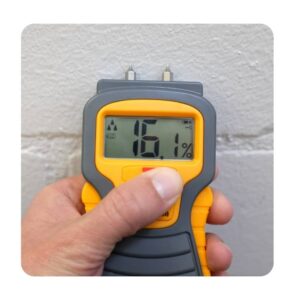
Industrial IoT and wireless sensor networks
Remote temperature, pressure, humidity, and vibration sensors installed in pipelines, warehouses, and manufacturing plants. Battery replacement is expensive; decade-long life is a commercial requirement.
Asset tracking and GPS telematics
Vehicle fleet trackers, shipping container monitors, and cold-chain logistics sensors operate for years between battery changes.
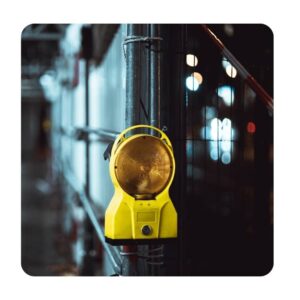
Security and alarm systems
Professional-grade intruder alarms, smoke detectors, and emergency lighting backup circuits specify Li-SOCl₂ for its long shelf life and reliable pulse delivery.
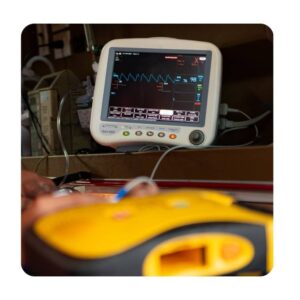
Medical and laboratory equipment
Implant-adjacent devices, portable diagnostic instruments, and temperature data loggers for pharmaceutical supply chains require the flat voltage curve and sterile-compatible hermetic seal.
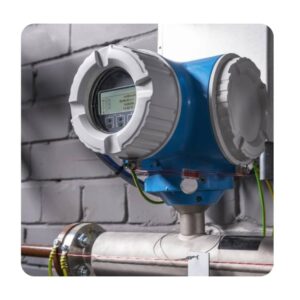
Military and aerospace
Extreme temperature performance and hermetic construction make Li-SOCl₂ the default for aerospace payloads, military communication equipment, and oil/gas down-hole sensors.
Limitations and Design Considerations
Understanding where Li-SOCl₂ cells are not appropriate is as important as knowing where they excel.
Not suitable for high continuous drain. Bobbin-type cells are rated for continuous currents in the range of 20–100 mA depending on size. Attempting to sustain higher currents causes heat build-up, accelerated degradation, and potential safety issues.
Passivation voltage delay. As described above, cells that have been stored — particularly in cold conditions — may show a brief voltage drop when first energised. Design your low-voltage cut-off with enough headroom to avoid false “battery dead” signals during this recovery period.
Non-rechargeable. Li-SOCl₂ are primary cells. Attempting to charge them is dangerous and will result in cell rupture or worse. Never use them in circuits with any charging component.
Handling and disposal requirements. Thionyl chloride is toxic. Cells must be stored, handled, and disposed of according to the relevant safety data sheets. Do not incinerate, short-circuit, or mechanically crush cells.
Li-SOCl₂ vs. Other Primary Battery Chemistries
| Chemistry | Nominal Voltage | Energy Density | Temp Range | Shelf Life | Best For |
|---|---|---|---|---|---|
| Li-SOCl₂ (this guide) | 3.6 V | Up to 730 Wh/kg | −60 to +85 °C | 10+ years | Industrial IoT, metering, extreme environments |
| Li-MnO₂ | 3.0 V | ~280 Wh/kg | −40 to +70 °C | 7–10 years | Consumer electronics, cameras |
| Li-FeS₂ (AA) | 1.5 V | ~300 Wh/kg | −40 to +60 °C | 15 years | High-drain consumer (torches, cameras) |
| Alkaline (AA) | 1.5 V | ~150 Wh/kg | −20 to +55 °C | 5–7 years | General consumer |
Li-SOCl₂ wins when voltage stability, extreme longevity, and harsh environment performance all matter simultaneously.
How to Choose the Right Li-SOCl₂ Battery for Your Application
Use these four questions to narrow your selection:
1. What is the average continuous current draw?
If it is below 50 mA, a standard bobbin cell is appropriate. If your device has burst transmission requirements, consider spiral-wound or a hybrid capacitor design.
2. What is the required service life?
Match capacity (mAh) to total estimated current consumption over the service life, with a 20% safety margin. A device drawing 0.1 mA continuously for 10 years consumes ~8,760 mAh — that is C-cell territory.
3. What is the operating temperature range?
All Uniross Li-SOCl₂ cells are rated for industrial temperature ranges. If you are operating below −40 °C or in high-vibration environments, confirm cell construction with the datasheet.
4. What form factor fits your housing?
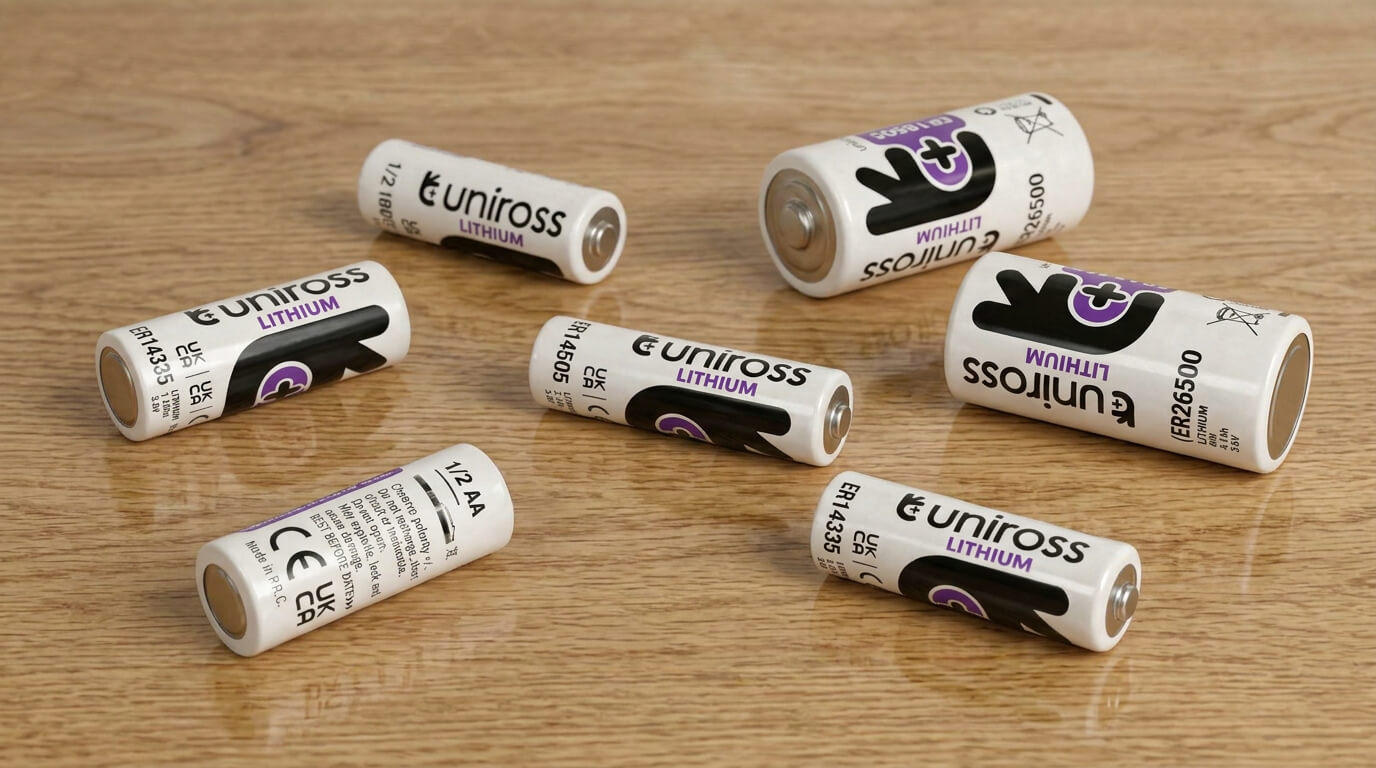
The Uniross industrial Li-SOCl₂ range covers five standard sizes:
| Model | Size | Voltage | Capacity | Continuous Current | Typical Application |
|---|---|---|---|---|---|
| UER14250 | 1/2AA | 3.6 V | — | 20 mA | Compact IoT sensors, data loggers |
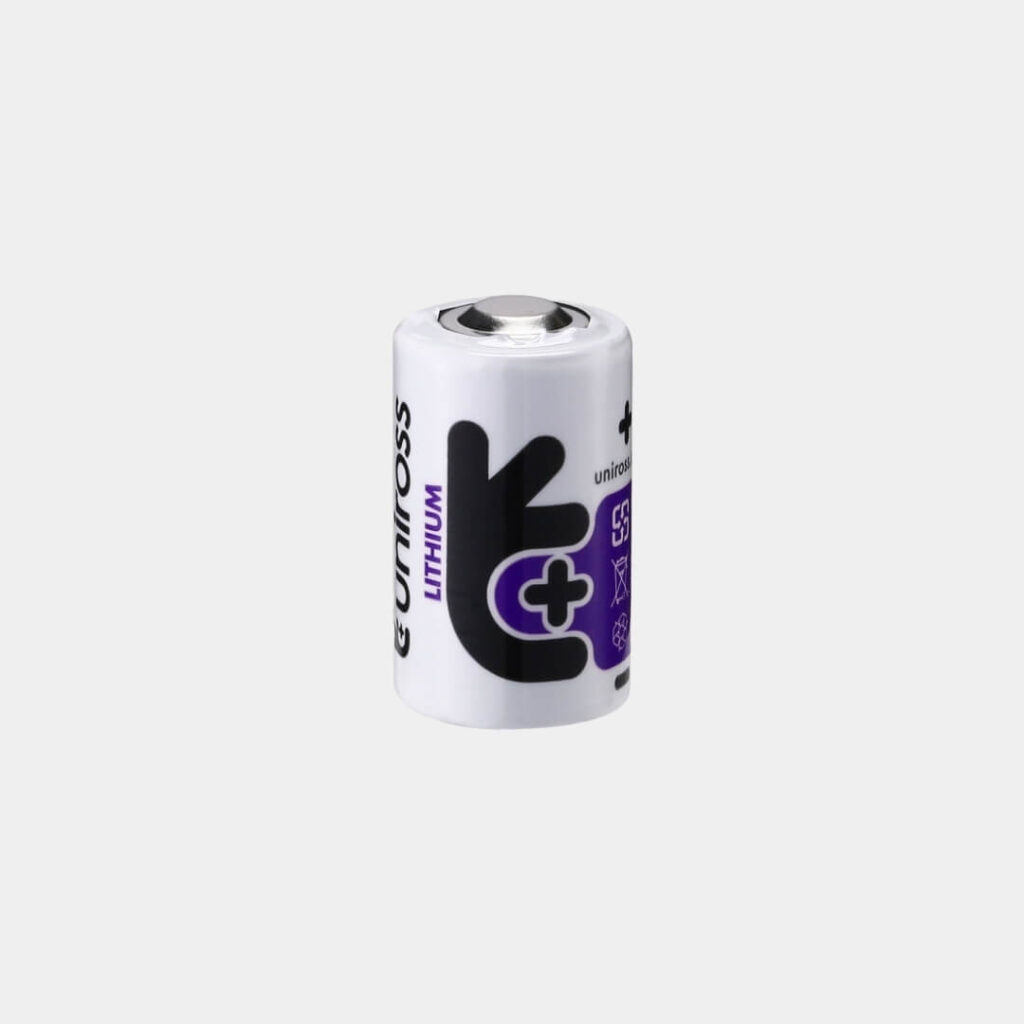
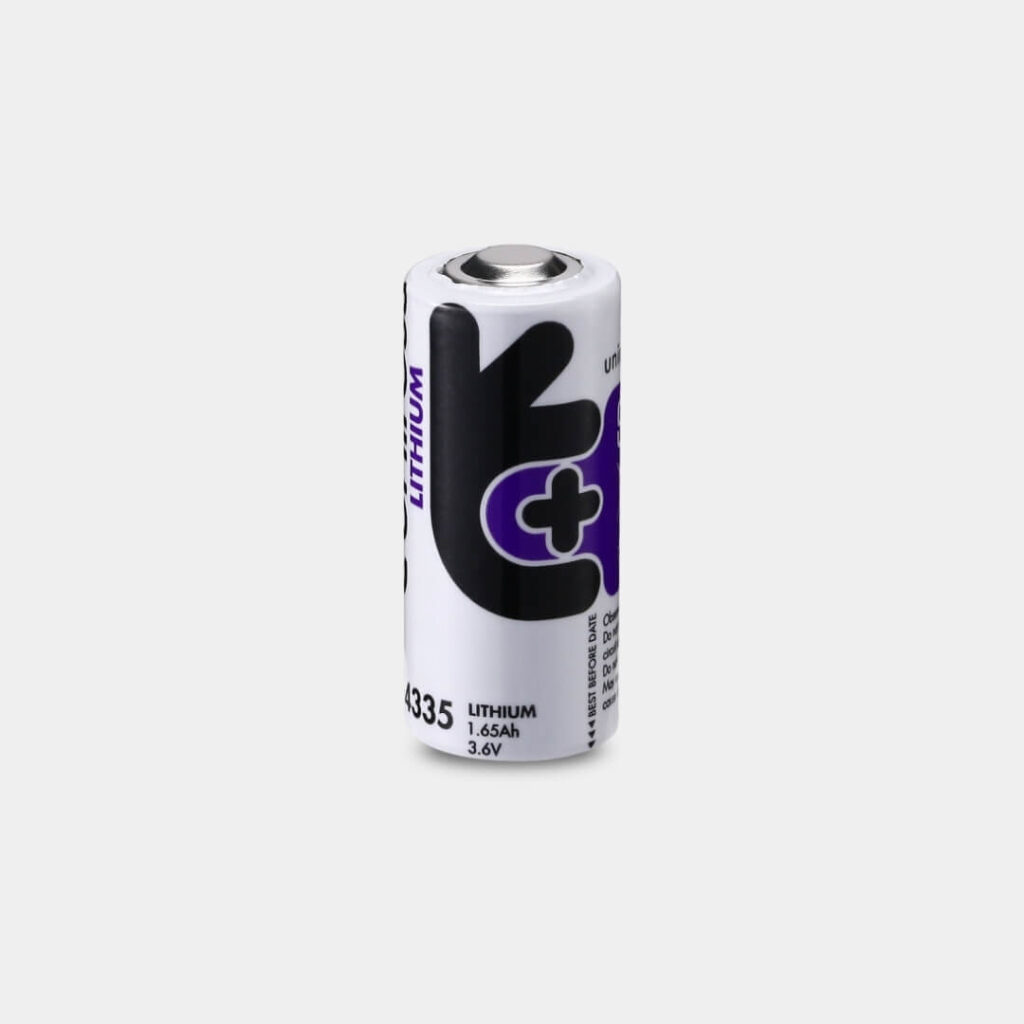
| UER14335 | 2/3AA | 3.6 V | — | 30 mA | Smart utility meters, wireless nodes |
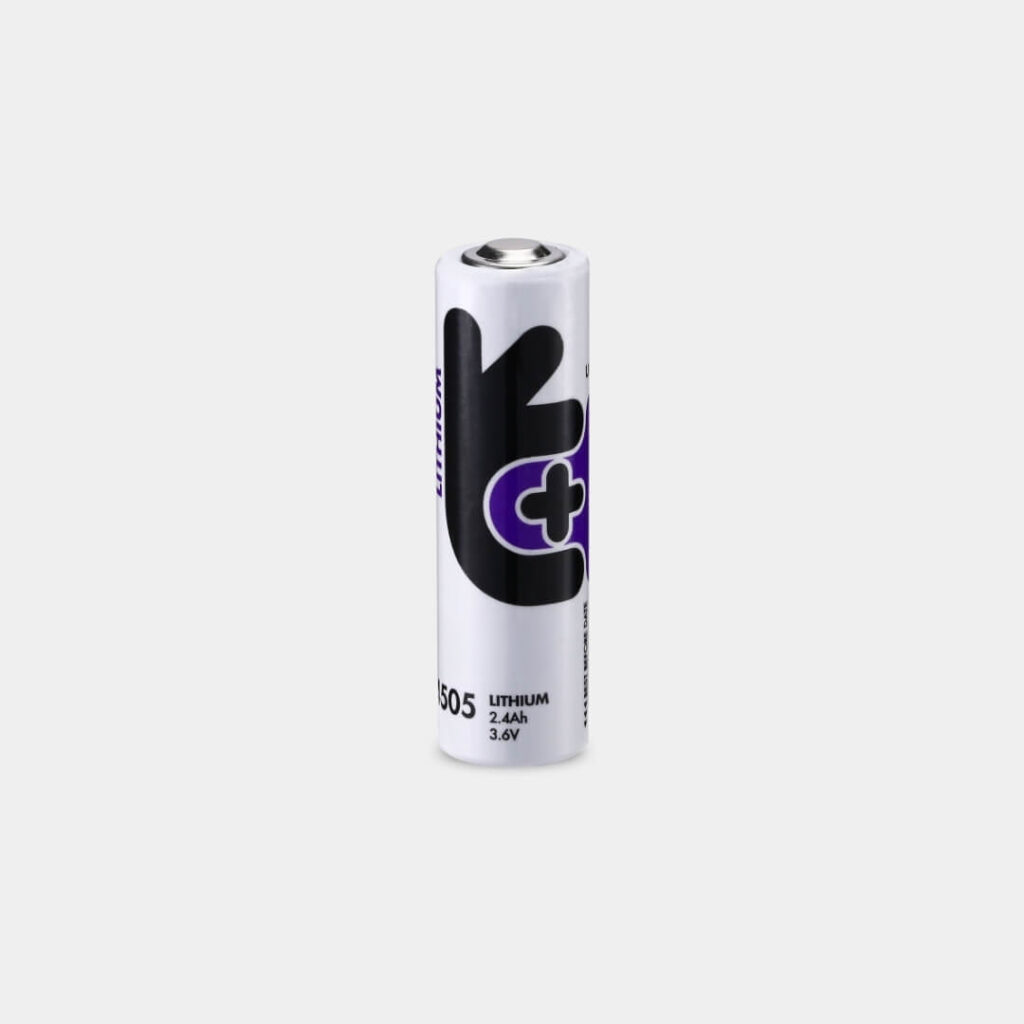
| UER14505 | AA | 3.6 V | 2,600 mAh | 50 mA | Security systems, alarms, telematics |
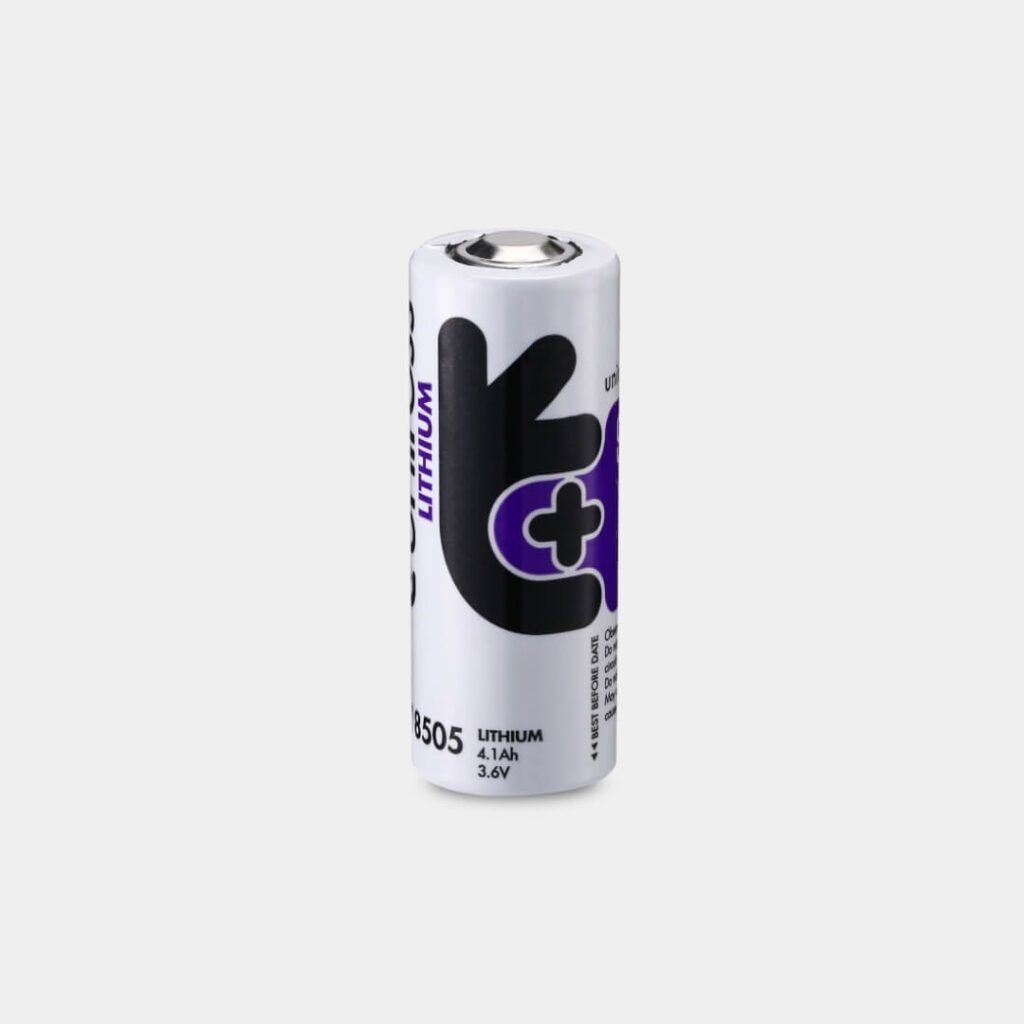
| UER18505 | 18650 | 3.6 V | 4,100 mAh | 80 mA | Military equipment, R&D instruments |
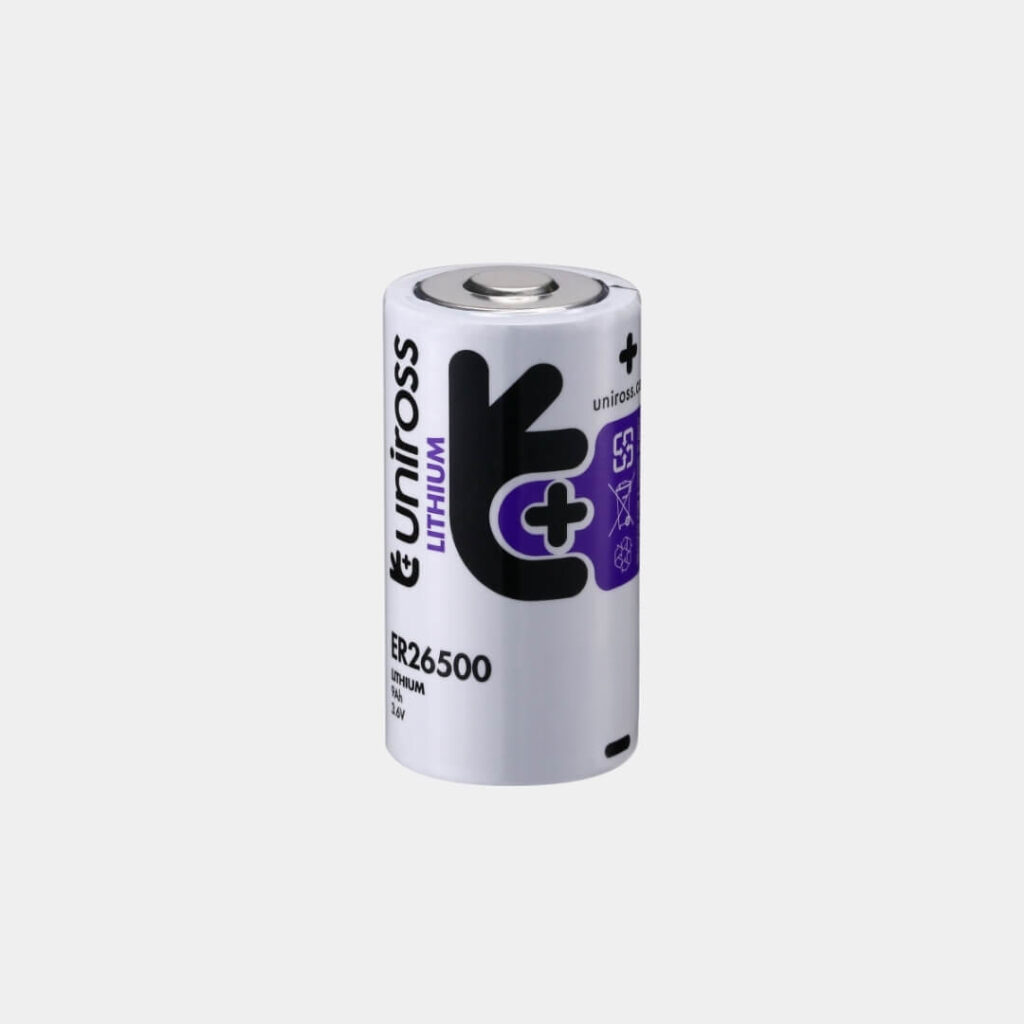
| UER26500 | C | 3.6 V | 8,500 mAh | 100 mA | High-capacity industrial installations |
All cells carry a 10-year rated shelf life and are designed for maintenance-free operation. Browse the full Uniross Li-SOCl₂ range

Uniross Industrial UER14250 – 1/2AA Lithium Thionyl Chloride Battery
Uniross Industrial UER14335 – 2/3AA Lithium Thionyl Chloride Battery
Uniross Industrial UER14505 – AA Lithium Thionyl Chloride Battery
Uniross Industrial UER18505 – Lithium Thionyl Chloride Battery
Uniross Industrial UER26500 – Lithium Thionyl Chloride Battery
Safety and Handling
Li-SOCl₂ cells are safe when used as designed. Follow these guidelines:
- Storage: Store at room temperature (15–25 °C), away from moisture and direct sunlight. Do not store at temperatures above 60 °C.
- Installation: Observe correct polarity. Reverse connection will destroy the cell and may cause leakage.
- Do not recharge: No charging circuits, ever.
- Do not incinerate or puncture: The electrolyte is toxic and will release harmful fumes if the cell is breached.
- Disposal: Comply with local regulations for lithium primary cells. Many jurisdictions require dedicated collection via battery recycling schemes.
Frequently Asked Questions
What does lithium thionyl chloride mean?
It refers to the two active materials in the cell: lithium (the anode) and thionyl chloride (SOCl₂), which serves as both cathode depolariser and electrolyte solvent. Together they produce a nominal 3.6 V cell with the highest energy density of any primary battery chemistry.
How long do lithium thionyl chloride batteries last?
In low-drain applications such as smart meters and wireless sensors, Li-SOCl₂ cells routinely last 10–15 years. The rated shelf life for Uniross industrial cells is 10 years from manufacture.
What is the voltage of a lithium thionyl chloride battery?
The nominal voltage is 3.6 V, approximately 2.4× that of a standard AA alkaline battery. The discharge curve is exceptionally flat — the voltage remains close to 3.6 V throughout most of the cell’s life.
Can lithium thionyl chloride batteries be recharged?
No. Li-SOCl₂ are primary (single-use) cells. Attempting to recharge them is dangerous and will cause cell failure or rupture.
What is passivation in a Li-SOCl₂ battery?
Passivation is the formation of a thin lithium chloride film on the anode during storage or low-use periods. It reduces self-discharge (good) but causes a brief voltage delay when the cell is first loaded after extended storage (design consideration). The cell recovers to normal voltage within seconds to minutes depending on temperature and storage duration.
What is the difference between bobbin and spiral-wound Li-SOCl₂ cells?
Bobbin cells have higher energy density and are ideal for low continuous drain. Spiral-wound cells have lower internal resistance and support higher pulse currents — ideal for burst-transmitting IoT devices.
Are lithium thionyl chloride batteries safe?
Yes, when used as specified. The sealed stainless steel construction prevents leakage under normal conditions. Hazards arise only from misuse: attempting to recharge, incinerate, crush, or short-circuit the cell.
Which applications use Li-SOCl₂ batteries?
Smart utility meters, industrial wireless sensors, GPS asset trackers, military electronics, medical devices, oil and gas down-hole instruments, and professional alarm systems.
Why Choose Uniross Li-SOCl₂ Batteries?
- Five form factors — from compact 1/2AA (UER14250) to high-capacity C cell (UER26500), covering the full range of industrial application sizes
- 10-year rated shelf life across the entire range
- Maintenance-free design for embedded, inaccessible, or remote installations
- Industrial temperature performance rated for the extreme conditions where these batteries are actually deployed
- Full technical datasheets available for every SKU to support engineering specification and certification